
Smart HVAC describes heating, ventilation, and air conditioning systems that combine efficient mechanical equipment, intelligent controls, and indoor environmental quality measures to reduce energy use and improve comfort. This article equips Litchfield County and nearby West Hartford homeowners with practical guidance on heat pump installation, smart thermostat integration, and indoor air quality testing so you can evaluate upgrades, financing, and local incentives. Homeowners face rising energy costs, varied Connecticut winters, and indoor pollutant concerns; smart HVAC solutions address these issues by delivering year-round comfort, lower operating bills, and healthier indoor environments. Below we explain the benefits and mechanics of air-source, mini-split, and geothermal heat pumps, how smart thermostats enhance comfort and savings, why IAQ testing matters in Connecticut homes, and what maintenance or geothermal options are right for your property. We also cover financing, rebate pathways tied to Energize CT programs, and how a local contractor can help you apply incentives and install systems correctly. Read on for concrete comparisons, checklists, and stepwise guidance to evaluate an HVAC upgrade for Litchfield County homes.
What Are the Benefits of Heat Pump Installation in Litchfield County, CT?
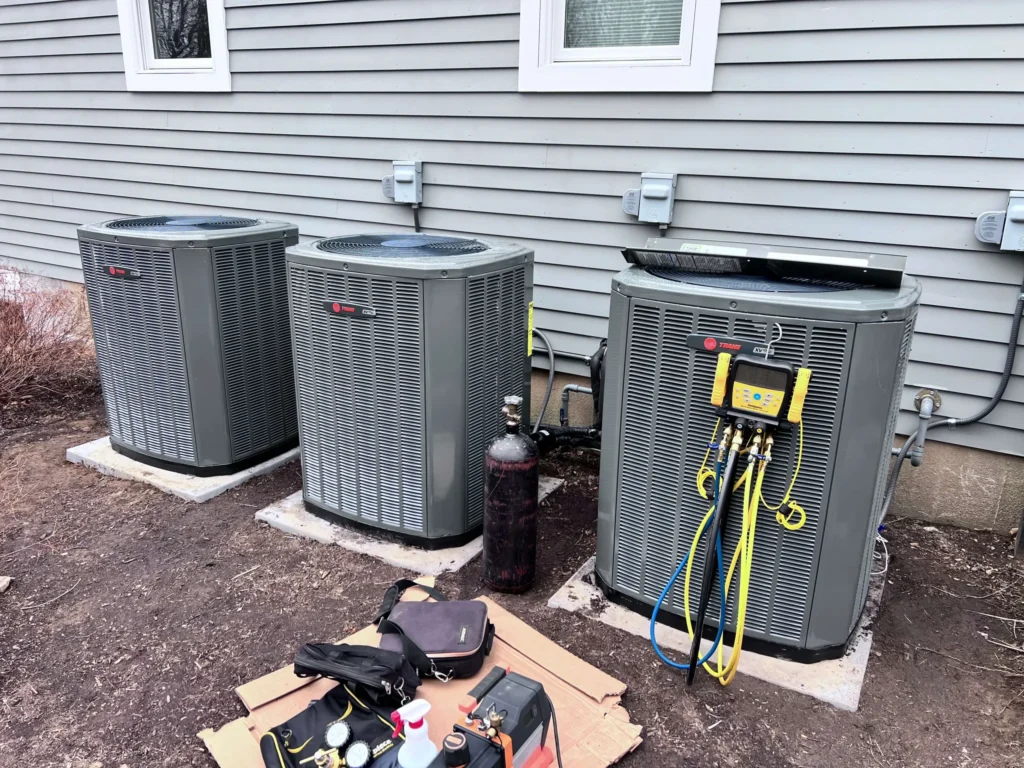
A heat pump is an HVAC system that moves heat rather than producing it, delivering efficient heating in winter and cooling in summer through the same equipment. This mechanism yields higher seasonal COP (coefficient of performance) than resistance heating and reduces delivered energy per unit of heat, which translates into smaller utility bills and lower carbon emissions for Litchfield County homes. Heat pumps also provide consistent comfort because they operate continuously at modulated capacity, avoiding wide temperature swings common with on/off systems. Understanding these benefits helps homeowners choose between air-source, mini-split, and geothermal options based on home type, ducting, and long-term cost goals.
Choosing the right heat pump type depends on insulation, heating load, and long-term energy goals; the next subsection explains efficiency mechanics that drive those savings.
How Do Heat Pumps Improve Energy Efficiency for Litchfield Homes?
Heat pumps improve energy efficiency by transferring thermal energy from one place to another, so a single kilowatt of electricity can move multiple kilowatts of heat using a compressor and refrigerant circuit. In Connecticut’s seasonal climate, modern cold-climate air-source heat pumps and geothermal systems maintain higher seasonal performance factors (COP/ HSPF/SEER equivalents) than conventional fossil or resistance systems, yielding measurable reductions on winter heating bills. For example, replacing an electric resistance system with a properly sized air-source heat pump often reduces annual heating energy use by roughly 25–40 percent depending on home tightness and backup strategies. Installing proper controls and matching equipment to the home’s load is critical, because oversizing or poor ductwork can negate efficiency gains. Understanding these mechanics informs equipment selection, and the following section outlines how homeowners can lower the upfront barrier through financing and incentives.
What Financing Options Are Available for Heat Pump Installation?
Homeowners can combine utility rebates, state incentives, and contractor financing to reduce upfront costs for heat pump installation and improve payback timelines in Connecticut. Typical paths include utility rebate programs and state-level incentives designed for high-efficiency heat pumps; pairing those with contractor financing can make installation affordable without large initial expenditure. Plumtech, LLC offers financing UVPs that include $0 down and 0 percent APR financing options, and as an Energize CT–certified contractor they assist with rebate paperwork and qualification steps to help homeowners apply available incentives. To pursue financing, homeowners should collect home energy use data, confirm equipment eligibility, and request a formal quote that itemizes rebates and financed amounts so payback and monthly costs are clear.
The availability of financing and paperwork assistance reduces the effective upfront cost and encourages homeowners to prioritize energy-efficient heat pump installations in Litchfield County.
How Does Smart Thermostat Installation Enhance Home Comfort in West Hartford and Surrounding Areas?
A smart thermostat is a connected control device that learns schedules, enables remote control, and orchestrates HVAC operation to reduce wasted runtime while maintaining comfort through zoning and adaptive algorithms. By optimizing setpoint schedules, using geofencing and occupancy data, and integrating with heat pump staging or multi-stage HVAC systems, smart thermostats smooth temperature variation, reduce energy consumption, and provide actionable energy reports to homeowners. These controls also enable demand management features and can improve system responsiveness when paired with variable-capacity heat pumps, delivering both comfort and savings.
The following list highlights primary mechanisms by which smart thermostats deliver value to Connecticut homeowners.
- Adaptive Scheduling: Automatically learns occupancy patterns to reduce runtime when spaces are unoccupied.
- Remote Control and Monitoring: Allows immediate adjustments and energy reporting via smartphone.
- Integration with HVAC Staging: Coordinates multi-stage heat pump operation for efficient capacity use.
These mechanisms translate to predictable, user-friendly benefits and help homeowners make informed upgrade decisions. The next subsection considers specific model suitability and installation considerations.
Which Smart Thermostats Are Best Suited for Litchfield County Homes?
For Litchfield County homes, prioritize smart thermostats that explicitly support heat pump wiring, multi-stage controls, and remote sensors to manage diverse room loads and Connecticut’s cold winters. Models that include geofencing and adaptive learning help reduce wasted runtime while providing practical convenience through mobile control; units designed for multi-stage systems avoid unintended backup heat activation and maintain efficiency. When homes have multiple occupied zones or older ductwork, multi-sensor configurations and compatibility with zoning relays are valuable features. Professional installation ensures correct wiring, sensor placement, and integration with existing HVAC communications, reducing risk of improper staging and maximizing expected energy savings.
Selecting a thermostat with installer support and model compatibility reduces installation complexity and helps the device deliver consistent savings when paired with efficient heat pumps.
What Energy Savings Can Homeowners Expect from Smart Thermostat Integration?
Smart thermostats commonly deliver single-digit to low-double-digit percentage savings on heating and cooling energy depending on occupant behavior, home envelope, and HVAC type; typical published ranges for combined annual HVAC savings are 5–15 percent. Realized savings depend on baseline habits—homes with poor setback routines tend to capture higher gains—while well-tuned heat pump pairings boost savings because the thermostat can optimize variable capacity operation. For example, a 10 percent reduction on a home using 10,000 kWh annually for heating/cooling equates to 1,000 kWh saved per year, with actual dollar savings tied to local electricity rates. Combining smart thermostat control with insulation improvements, efficient heat pumps, or zoning yields multiplicative benefits rather than additive ones.
Understanding these ranges helps homeowners set expectations and prioritize paired upgrades like heat pump installations or duct sealing to maximize returns. Plumtech’s trained installers can evaluate compatibility and install thermostats to ensure integration with existing or new HVAC systems.
Why Is Indoor Air Quality Testing Essential for Litchfield County Homeowners?
Indoor air quality (IAQ) testing identifies pollutants such as mold spores, radon, volatile organic compounds (VOCs), and fine particulate matter that commonly affect Connecticut homes and can harm occupant health. Testing works by sampling air and surfaces with purpose-built detectors or lab assays to quantify pollutant levels, enabling targeted remediation like filtration, ventilation, or source removal. Good IAQ practices also align with energy-efficient homes because balanced ventilation and filtration can maintain health without excessive energy penalties when designed correctly. Performing IAQ testing provides a baseline, documents problems for remediation, and quantifies improvements after interventions to protect vulnerable residents and preserve home value.
The next subsection lists the most common indoor pollutants Connecticut homeowners should prioritize.
What Common Indoor Air Pollutants Affect Connecticut Homes?
Connecticut homes commonly face mold driven by moisture intrusion, radon seeping from soil, VOCs from paints or combustion, and particulate matter from wood stoves or outdoor infiltration; each pollutant has distinct health implications and remediation needs. Mold promotes allergic responses and respiratory irritation, especially in damp basements and older homes, while radon exposure increases long-term lung cancer risk and requires formal testing due to its invisible nature. VOCs can cause short-term headaches and persistent exposure concerns, and PM2.5 penetrates deep into lungs affecting cardiovascular health. Identifying these pollutants through targeted IAQ testing lets homeowners prioritize corrective actions that protect occupants and improve overall indoor environmental quality.
Recognizing typical pollutant sources focuses remediation efforts where they deliver the greatest health and comfort benefits, which leads into the types of services available locally.
What Comprehensive HVAC Repair and Maintenance Services Does Plumtech Offer in Litchfield County?
Regular repair and maintenance keep HVAC systems operating safely and efficiently, reducing emergency failures and preserving equipment life while sustaining design efficiency. Comprehensive services include seasonal tune-ups, filter and coil cleaning, refrigerant checks for heat pumps and AC, combustion safety inspections for fuel-burning equipment, and emergency repair response to restore comfort quickly.
Preventive maintenance identifies wear points like motors, belts, and refrigerant leaks before they cause major failures, and scheduled service contracts often provide prioritized response and documented maintenance history. For homeowners evaluating service providers, clear maintenance plans and emergency repair availability matter because they reduce downtime and long-term replacement costs.
The maintenance checklist below outlines key seasonal tasks homeowners should expect from a thorough service visit and why each item matters.
- Filter and indoor coil inspection: Ensures airflow and heat transfer efficiency.
- Outdoor unit and refrigerant check: Validates proper charge and compressor health.
- Thermostat calibration and control testing: Confirms accurate temperature control and staging.
- Combustion and safety checks (if applicable): Verifies safe operation of fuel-burning appliances.
Regular maintenance keeps systems reliable and energy-efficient, preventing small issues from becoming costly repairs. The following H3 describes recommended timing and the one after explains how maintenance extends equipment life.
When Should Homeowners Schedule HVAC System Maintenance in Litchfield County?
Homeowners should schedule at least two maintenance visits annually—one in spring for cooling systems and one in fall for heating—to align checks with seasonal load changes and to prepare the system for peak use periods. Spring visits should focus on the air conditioning side: cleaning condensers, checking refrigerant levels, and verifying airflow, while fall visits should include heat pump heating checks or combustion safety tests for boilers and furnaces. Scheduling around seasonal transitions minimizes the risk of emergency failures during extreme weather and allows time to address discovered issues before peak demand. Maintaining a documented service history also simplifies warranty claims and supports efficient troubleshooting when problems arise.
How Does Regular HVAC Repair Extend System Lifespan and Efficiency?
Consistent maintenance reduces mechanical stress, prevents refrigerant loss, and ensures moving parts receive timely adjustments, which collectively extend the useful life of compressors, blowers, and heat exchangers. Addressing small leaks, replacing clogged filters, and keeping coils clean maintain heat transfer efficiency so systems run less, lowering operating hours and slowing wear. From a financial perspective, routine repairs that cost a few hundred dollars annually can postpone high-cost replacements and improve seasonal efficiency by several percentage points, yielding ongoing savings. Documented repair histories and timely service also enable better diagnostic decisions, allowing homeowners to choose repair versus upgrade based on data rather than emergency failure.
How Do Geothermal HVAC Systems Benefit Litchfield County Homes?
Geothermal HVAC uses ground-coupled loops to exchange heat with the earth, delivering stable high efficiency for both heating and cooling because underground temperatures remain relatively constant year-round. This stability yields elevated COPs compared with air-source systems, particularly during extreme outdoor temperatures, and results in lower operating costs and reduced greenhouse gas emissions over a system’s long lifespan. Geothermal systems require an upfront site evaluation to confirm land availability and soil conditions, but when feasible they offer predictable performance and often better long-term economics than conventional alternatives. Understanding the cost, installation footprint, and payback dynamics helps homeowners decide if geothermal heating and cooling cost CT expectations align with their financial and performance goals.
What Are the Energy and Cost Savings of Geothermal Heat Pumps in Connecticut?
Geothermal heat pumps typically achieve higher seasonal efficiency than air-source or combustion systems because ground temperatures reduce compressor work, producing energy savings that can reach 40–60 percent versus conventional electric resistance heating and substantial improvements over fuel-based systems.
Payback depends on local electricity prices, system sizing, installation complexity of the loop field, and any available incentives; upfront costs are higher but often offset over long operating lifetimes through reduced energy bills. For homeowners planning long-term ownership, geothermal’s lower operating cost and durable ground loop components make it an attractive investment, especially when combined with proper system design and efficient distribution components.
How Does Plumtech Ensure Expert Geothermal HVAC Installation and Support?
Plumtech, LLC lists geothermal HVAC certification among its service capabilities, providing site evaluations, loop field planning, certified installation practices, and post-installation support with a stated 3-year workmanship warranty. Their geothermal credentials support homeowners through permitting, system sizing, and warranty documentation, which can streamline installation milestones and provide assurance about workmanship quality. Plumtech’s service model includes aftercare and maintenance guidance specific to ground-source systems, ensuring that homeowners receive measurable performance and documented long-term service options. Choosing a contractor with geothermal experience and clear warranty terms reduces risk and helps homeowners maximize the lifetime benefits of a ground-source system.
This contractor support complements incentive and financing pathways that make geothermal projects more accessible, described in the next section.
What Local Incentives and Energy Rebates Support Smart HVAC Upgrades in Litchfield County?
Connecticut homeowners can access state and utility incentives that lower net cost for heat pump installations and smart control upgrades, and the rebate process typically requires checking program eligibility, confirming equipment specifications, and working with qualified contractors. Energize CT programs and utility rebates frequently specify certified contractor involvement for vendor validation and may require pre- and post-installation documentation. The homeowner rebate workflow often follows a sequence: verify eligibility, select qualifying equipment, obtain contractor quote and preapproval if needed, complete installation, and submit required documentation for rebate disbursement. Understanding these steps simplifies claiming incentives and ensures projects meet technical criteria for maximum rebate value.
How Can Homeowners Access Energize CT Rebates for Heat Pumps and Smart Thermostats?
To access Energize CT rebates, homeowners should first confirm current program rules and equipment lists, then hire a contractor certified by Energize CT or the relevant utility to ensure eligibility for the rebate. The typical steps are: check program eligibility for the specific heat pump or smart thermostat model, request a certified contractor quote, schedule and complete installation per program specifications, and file rebate paperwork with required invoices and contractor confirmation. Plumtech, LLC is noted as an Energize CT contractor and can assist homeowners with the contractor-qualification requirement and rebate paperwork to streamline approval. Documenting each step and retaining receipts and system specifications accelerates rebate processing and reduces the risk of denial.
What Are the Long-Term Financial Benefits of Energy-Efficient HVAC Systems?
Energy-efficient HVAC systems lower lifetime energy costs, reduce maintenance frequency through modernized components, and often increase home resale value by improving comfort and operating economy. Over time, reduced fuel or electric consumption compounds into significant savings that can offset higher initial investment; combined with rebates and financing options, the effective cost becomes more favorable. In addition to direct savings, modern systems improve reliability and can reduce emergency repair expenses, which contributes to predictable household budgeting. Evaluating cumulative savings, expected maintenance reductions, and marketability gains helps homeowners understand the full financial picture beyond first-year costs.
Considering these long-term financial benefits alongside available incentives and contractor support enables homeowners in Litchfield County to make informed decisions about investing in smart HVAC upgrades.
Conclusion
Investing in smart HVAC solutions not only enhances comfort but also significantly reduces energy costs and improves indoor air quality for Litchfield County homeowners. By understanding the benefits of heat pumps, smart thermostats, and indoor air quality testing, you can make informed decisions that lead to long-term savings and healthier living environments. Take the next step towards a more efficient home by exploring our range of HVAC services and financing options. Contact Plumtech, LLC today to learn how we can help you achieve your energy efficiency goals.
Smart Comfort Resource Center
Best Heat Pump Options for West Hartford & Farmington Homes
Smart Thermostat & Zoning Setup in Avon, Simsbury & Canton
Indoor Air Quality Testing & Purification for Litchfield & Torrington

